
Choosing an orthodontist in Austin area is one of the biggest decisions you'll make for yourself or your child. Braces and aligners do more than straighten teeth. They influence how the jaws grow, how the face looks in profile, how the teeth fit together, and, in some cases, how well a person breathes.
Here are the questions patients ask us most often at Sonrisas Dental Center | Sonrisas Orthodontics, and what we believe you should look for.
What's the difference between a dentist who offers braces and an orthodontist?
An orthodontist is a dentist who completed an additional two to three years of full-time specialty residency focused on tooth movement, jaw growth, and facial development. Many general dentists offer clear aligners, but a specialist has advanced training in diagnosing the skeletal and functional problems that cause crooked teeth. That training matters most for growing children, complex bites, and adults with jaw concerns.
Dr. Farnia, lead orthodontist at Sonrisas Orthodontics, completed her orthodontic residency and Master's degree in Orthodontics at Indiana University. Before dentistry, she trained in biomedical engineering, a background that shapes her systematic, analytical approach to diagnosis and treatment planning.
What to look for: A residency-trained orthodontist. Ask who will actually design and supervise your treatment.
Should an orthodontist look at more than just my teeth?
Yes. Straight teeth are only part of a good result. A thorough orthodontist evaluates your facial profile, lip support, smile line, jaw position, and how your face will age. Two patients with the same crooked teeth may need very different treatment plans depending on their facial structure.
Dr. Farnia approaches every case from the whole face inward. Drawing on her engineering background, she works systematically to balance facial harmony with a healthy, stable bite (dental occlusion), so the final smile fits the patient's face rather than a one-size-fits-all template.
What to look for: An orthodontist who discusses your profile, facial balance, and bite during your consultation, not only your teeth.
What imaging should a good orthodontist use?
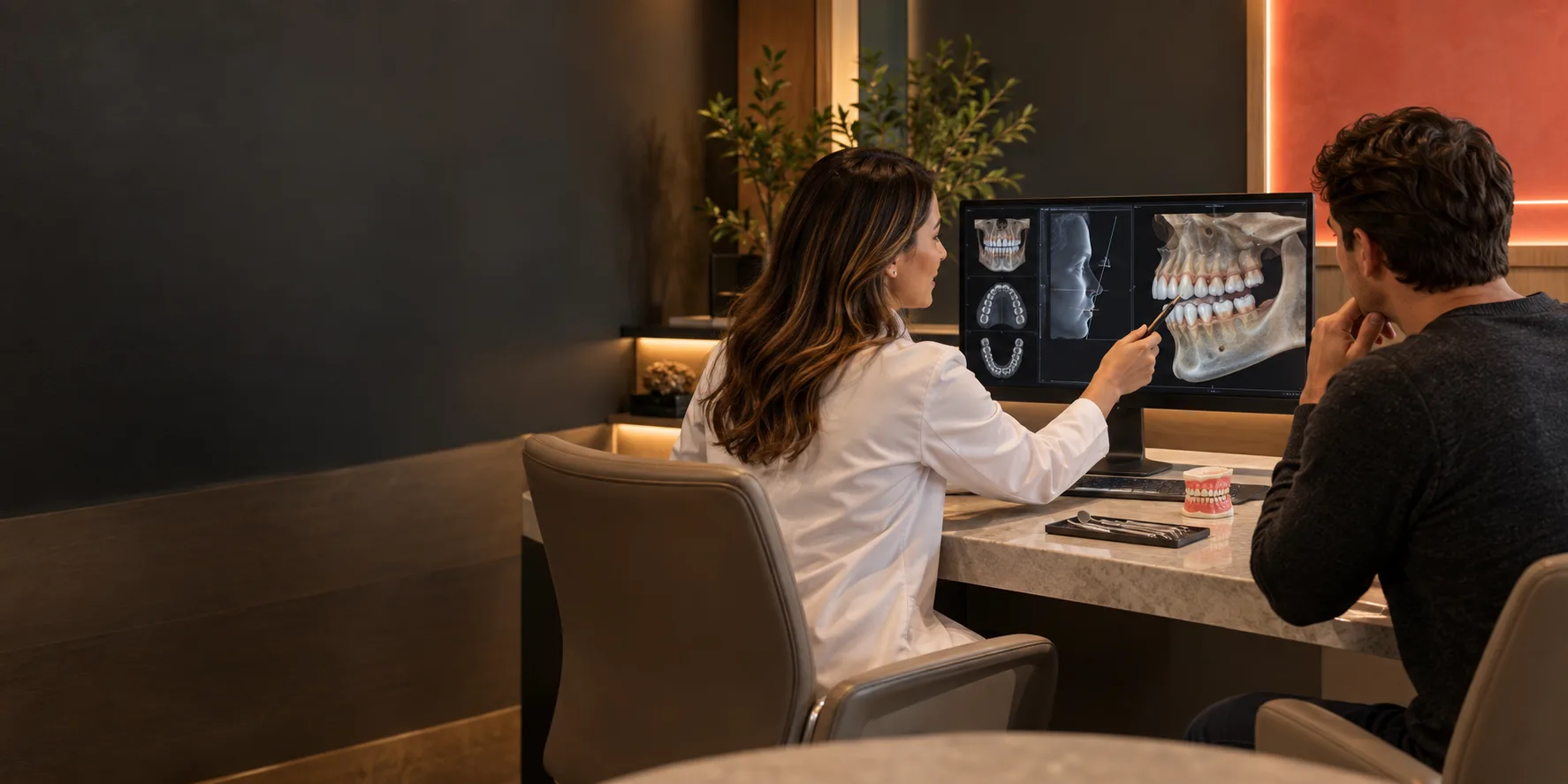
Traditional 2D X-rays show only part of the picture. Cone beam computed tomography (CBCT) creates a 3D image of the teeth, roots, jaws, joints, and airway, which allows for a much more complete diagnosis.
At Sonrisas Orthodontics, Dr. Farnia takes a CBCT scan for every orthodontic patient. This lets her see root positions, impacted teeth, bone support, jaw relationships, and airway dimensions before treatment begins. When a scan suggests an airway concern that hasn't been previously identified, she works with oral and maxillofacial radiologists who provide a specialized reading of the 3D images, adding another layer of expertise to the diagnosis.
What to look for: An orthodontist who uses 3D imaging and can explain what it shows about your case.
What does "airway" have to do with orthodontics?
The size and shape of the jaws affect the space available for the tongue and the airway. A narrow upper jaw, a recessed lower jaw, chronic mouth breathing, snoring, and teeth grinding can all be signs of airway-related concerns, especially in children.
Dr. Farnia has completed extensive continuing education in airway-focused orthodontics. She screens every patient for signs of breathing and sleep-related issues and considers airway health when choosing a treatment approach. When a concern is found, she coordinates with the appropriate medical providers, such as a pediatrician, ENT, or sleep physician, so the patient receives a complete evaluation.
What to look for: An orthodontist who asks about snoring, mouth breathing, sleep quality, and daytime fatigue. These questions show they're thinking about your overall health.
Do I need teeth pulled to get braces?
Not always. Extracting teeth to create space was once very common, and it is still the right choice in some cases. However, removing teeth can sometimes flatten the profile or reduce the space available for the tongue.
Dr. Farnia follows a non-extraction philosophy whenever it is clinically appropriate. Using techniques such as jaw expansion, guided growth in children, and modern appliances, she aims to create room for the teeth while preserving facial fullness and supporting airway space. Every case is evaluated individually, and if extraction truly is the best option, she will explain why.
What to look for: An orthodontist who explains the pros and cons of extraction vs. non-extraction for your specific case, and who offers alternatives when they exist.
When should my child first see an orthodontist?
The American Association of Orthodontists recommends a first orthodontic evaluation by age 7. At that age, many permanent teeth haven't come in yet, but an orthodontist can spot developing problems with jaw growth, crossbites, crowding, and oral habits.
Dr. Farnia is a strong advocate of early intervention. Treating certain problems while a child is still growing, often called Phase 1 treatment, can guide jaw development, create space for permanent teeth, support healthy breathing patterns, and in many cases reduce the need for extractions or jaw surgery later. Not every child needs early treatment, and an early visit often means simply monitoring growth.
What to look for: An orthodontist who is honest about whether early treatment is needed now or whether it's better to wait and watch.
Does the whole orthodontic team share the same approach?
It should. Consistency matters, especially if you may see more than one provider over the course of treatment.
At Sonrisas Orthodontics, Dr. Torres has worked closely with Dr. Farnia for more than six years. She shares the same philosophy of whole-face diagnosis, airway awareness, non-extraction treatment when appropriate, and early intervention. The two collaborate on cases, so patients benefit from a unified approach and two experienced orthodontic perspectives.
What to look for: A team whose orthodontists work together and share a consistent treatment philosophy.
Why does it matter if an orthodontist works with other specialists?
Many orthodontic cases involve more than tooth movement: impacted teeth, gum recession, missing teeth, implants, jaw surgery, or restorative work. When specialists work in separate offices, communication can break down and treatment can take longer.
At Sonrisas Dental Center | Sonrisas Orthodontics, Dr. Farnia and Dr. Torres work alongside our in-house oral surgeon, periodontist, implant team, and restorative dentists. Complex cases are planned together from the start, so every step, from exposing an impacted canine to placing an implant after braces, is coordinated. The goal is a result that is balanced in function, facial esthetics, airway health, and long-term stability.
What to look for: An orthodontist with a clear plan for coordinating care, ideally with specialists under one roof.
What else should I ask during a consultation?
A good orthodontist will welcome questions like these: How long will my treatment take, and what could make it longer? What happens after braces come off, and how do retainers work? Is there a payment plan, and does the office accept my insurance? Can I see before-and-after photos of cases similar to mine? Who do I contact if a bracket breaks or I have an emergency?
Do you offer orthodontic care in Spanish?
Yes. At Sonrisas Dental Center | Sonrisas Orthodontics, every consultation, treatment plan, and follow-up is available in English and Spanish, so patients and families fully understand their options.
Schedule a consultation with Sonrisas Orthodontics
If you're looking for an orthodontist in Round Rock, Cedar Park, or South Austin who looks at the whole face, uses 3D imaging for every patient, considers airway health, favors non-extraction treatment when possible, and works alongside in-house specialists, we'd love to meet you.
Book a consultation with Dr. Farnia or Dr. Torres
Call 512.593.7970
Atendemos en español. Consultations available in English and Spanish.